Could declining bone health put you at risk for hearing loss?

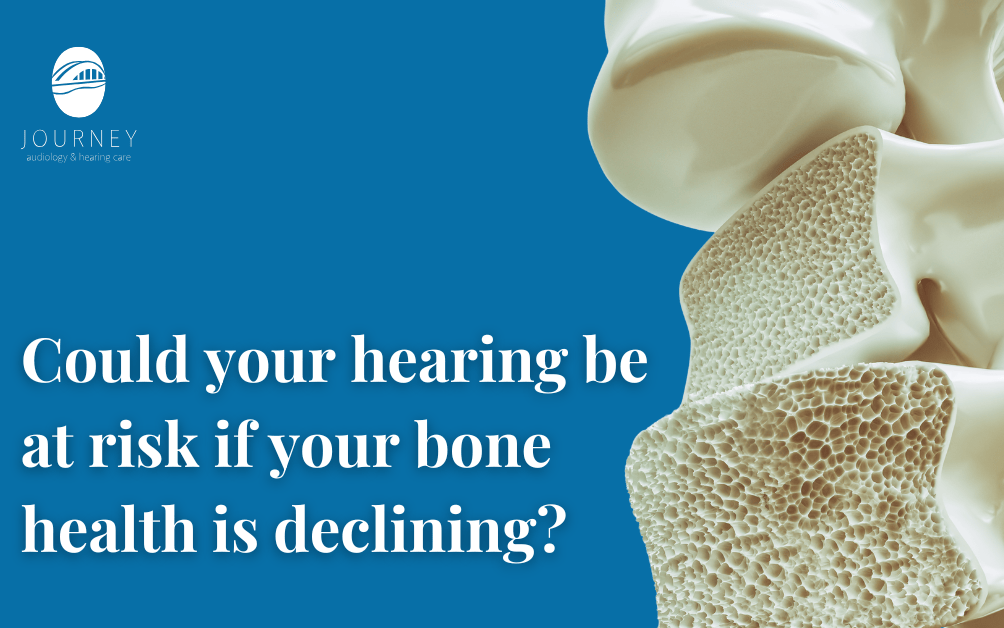
Yes. Data in the last decade has established a link between osteoporosis and a higher risk of hearing loss and tinnitus. The primary reason for this is due to the decline of the bone structures within the middle ear that play a key role in hearing.

And women are more at risk than men. To be more exact, in 2021 when researchers looked at 144,000 women who participated in the Nurses Health Study the risk of hearing loss was 40 percent higher in women with low bone density or osteoporosis.

How Bone Health Impacts Hearing Health

Osteoporosis occurs when bone is breaking down faster than the body can replace it, and it’s more common in Asian and white women. And one of the key reasons researchers believe there is a link between bone health and hearing health is that if the tiny bones that are involved in hearing experience demineralization (become weak), it’s possible the nerves and structures involved in hearing that they protect (the ones located within the cochlea) may be damaged or more susceptible to damage.

A study in 2015 also connected sudden hearing loss to osteoporosis and low bone density. A 2015 Journal of Clinical Endocrinology & Metabolism study showed that patients with osteoporosis were 1.76x more likely to develop sudden hearing loss vs patients without osteoporosis.  The study also found the incident rate for sudden hearing loss with osteoporosis was significantly greater in both female patients, and those who were aged 50 or older.

Tips for Avoiding Declining Bone Health

To help protect against a higher risk of hearing loss due to osteoporosis, it’s important to keep your bones as strong and healthy as possible. The NHS has some great recommendations to keep in mind, including:

  1. Ensure you’re getting a proper intake of calcium and Vitamin D
  2. Strength training (resistance exercises) is helpful to build and maintain bone density
  3. Avoid smoking
  4. Limit alcohol intake
  5. Try to maintain a healthy body weight to avoid an increased risk of fractures

Should I Get My Hearing Checked If I Have Low Bone Density?

Yes! If you are struggling with lower bone density or osteoporosis, getting a regular hearing test is a good idea. Doing so can help you catch hearing loss before it becomes severe, and it could give you more options for treatment as well.

Plus, the earlier you can catch and treat hearing loss, the less likely you are to see as big of a negative impact on your life (including missing key words at work, strain on personal relationships, listening fatigue, and social isolation to name  few).  

Book a hearing test here today and we can discuss

Frequently Asked Questions

Do I still need in-office visits if I do concierge hearing care?

While many follow-up appointments and hearing aid adjustments can be completed remotely, some services—such as hearing evaluations, ear examinations, or new hearing aid fittings—are best performed in person. We’ll help you determine which visits can be handled remotely.

Can older adults use remote hearing care?

Of course! Many older adults enjoy the convenience of remote hearing care, especially if traveling is difficult or if they are traveling to see grandkids and friends. Our team provides simple instructions and support to make the technology easy to use, and family members are always welcome to assist during appointments. Just give us a call at (651) 661-1052 to set up a remote hearing care appointment.

Can patients outside Hastings receive remote hearing aid support?

Absolutely! If you move, if your hearing aids came from us, or your hearing aids are compatible with our remote programming, we can often provide ongoing support even if you live or move outside of Hastings. We can also do this if you are temporarily away from home and traveling. We’ll let you know if your devices are eligible and if we see any concerns with servicing your location remotely or via telehealth. Contact us by phone today to get more information. Just give us a call at (651) 661-1052.

Can snowbirds receive hearing aid adjustments while traveling?

Yes! We absolutely love our snowbird patients and happily serve our patients a they travel with a variety of needs. One of the biggest benefits of remote hearing care is that many hearing aid programming adjustments can be completed while you’re away from Minnesota. Whether you’re spending the winter in Arizona, Florida, or elsewhere, we’re often able to help you stay connected without interrupting your travels.