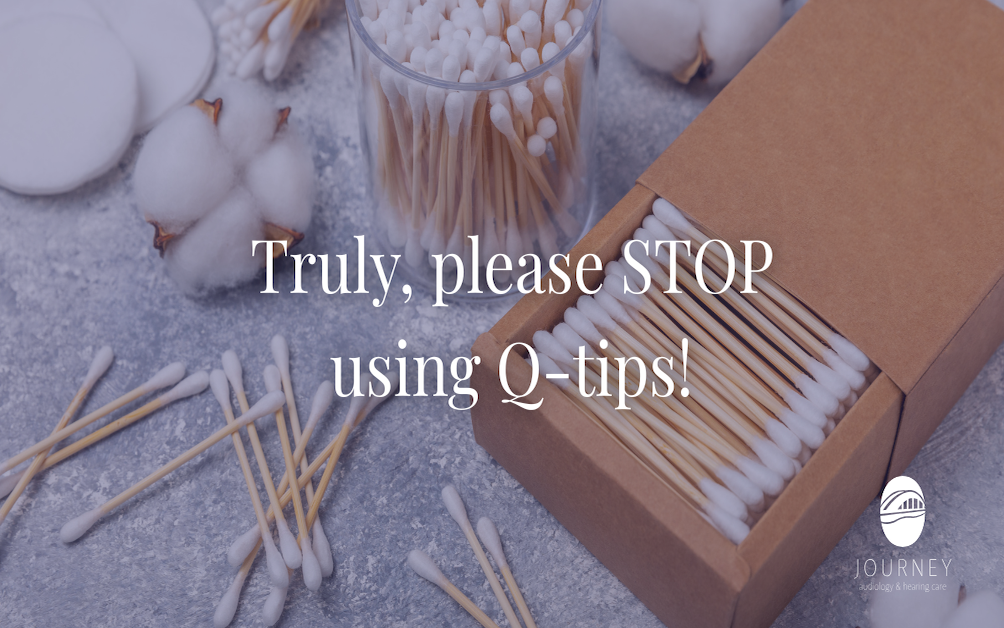
First off – NO Q-TIPS!

Let us repeat in a different way: please, please, pretty please do not stick those cotton swab sticks in your ears.

We know cleaning dirt, debris, and earwax (or more formally known as cerumen) out of your ears has been something people associate with Q-tips for a long time. But the truth is, Q-tips can really damage your ears and actually force earwax and other unwanted elements further in the ear canal. So instead of having cleaner ears that can hear better, you end up with muffled sound, more problems hearing, a stuffy feeling, and even possible ear infections or eardrum damage.

Two Better Ways to Remove Earwax Recommended by An Audiologist

Below are safer alternatives to Q-tips for cleaning out your ears.

1. Using an at-home earwax removal kit recommended by a professional

Earwax removal kits can be provided by a physician or purchased over the counter in most drug stores. Learn more about how these kits work here.

2. Go to your hearing care professional

Hearing specialists typically use one of three methods to remove earwax: irrigation, suction, or manual removal. They are also specifically trained to remove earwax, debris (sand from the beach, domes from hearing aids, etc.), and can advise if you need to see your primary care physician for further care. For example, if you get an unusual amount of earwax frequently or are prone to chronic ear infections, they may recommend following up with your doctor.

Signs You Have an Earwax Blockage

The following symptoms can mean your ears are blocked by earwax.

  • Earache
  • Tinnitus (ringing of the ears)
  • Decreased hearing
  • Feeling of ear fullness
  • Dizziness

When earwax builds up and blocks the ear canals, it may need to be removed. Depending on the size and severity of the blockage, this can be done at home or at our office. Note: If you experience pain or discomfort as a result of earwax or suspect you have a blockage, you should see a professional ASAP!

See an Audiologist if You Have Hearing Aids

Earwax typically clears itself from the ears, but if you wear earmolds or hearing aids, it’s especially likely to accumulate and cause a blockage.

If you have hearing aids, the best ear cleaning option is to go see your audiologist. The reason for this is that they are professionally trained to remove earwax and debris, and they can also clean your hearing aids to ensure no wax or debris remains. This will ensure sound quality is crisp, clear, and voices are easy to understand.

Book an Earwax Removal Appointment

If you’re nervous about cleaning out your ears or a blockage occurs, it’s a good idea to come see us.

Schedule an appointment with us today to get your ears (and hearing aids too) cleaned!